


【西粟倉中学校】1・2年生音楽 西粟倉に響く沖縄の風!〈実施報告〉※R7年度記事
2026.06.16
数年前まで修学旅行に向けて練習に使われていた、沖縄の伝統楽器「三線」。音楽室の倉庫に大量に保管されていることを知った生徒から「弾いてみたい!」という声が挙がり、その好奇心に応える形で特別授業がスタートしました。講師を務めるのは、沖縄県久米島での生活経験があるNestの福岡です。
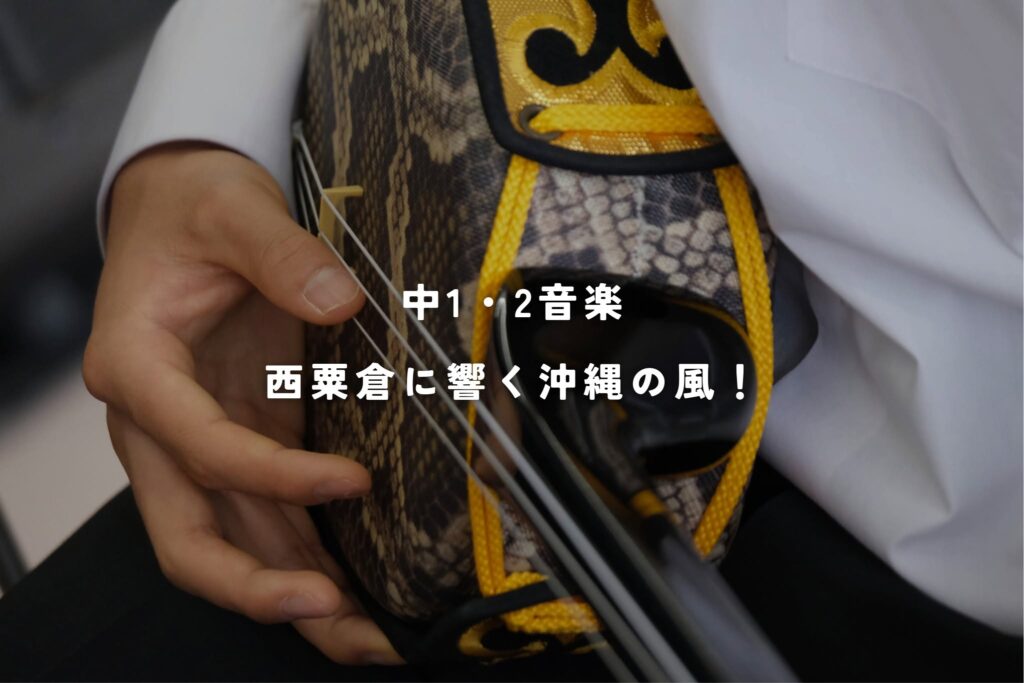
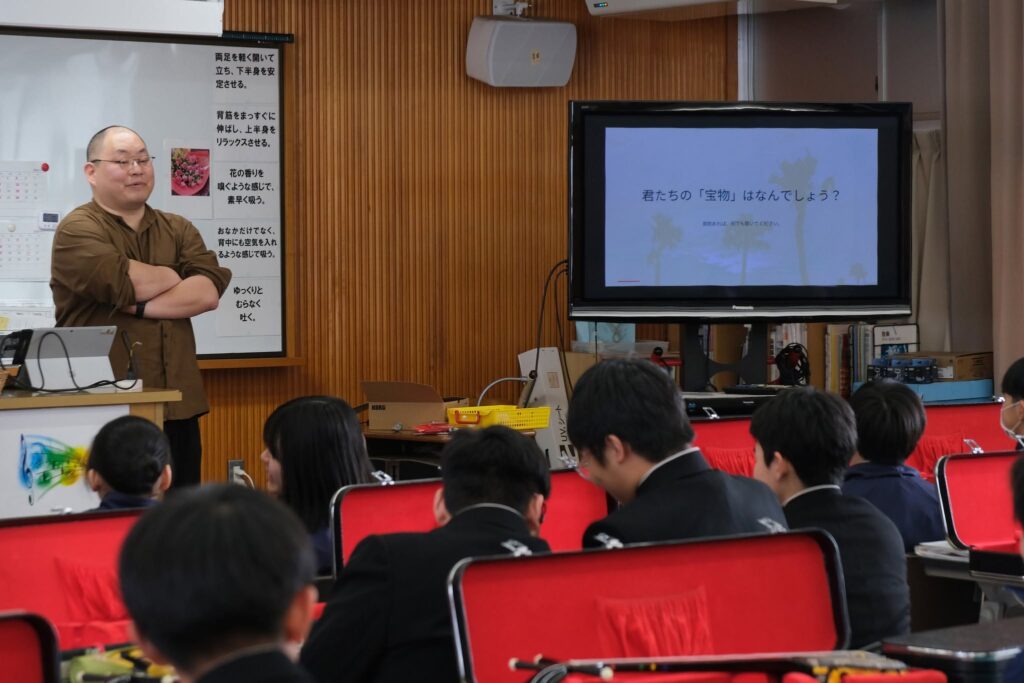
授業の前半では、三線の技術だけでなく、その背景にある沖縄の歴史や文化についても触れました。福岡からは、現地の中学生たちが学校行事や地域の祭りで当たり前のように三線を手に取り、自分たちの文化を繋いでいるエピソードを紹介。「あなたたちがソーラン節を踊るように、同世代の子たちが“エイサー”の担い手として、学校行事や地域の祭りで彼らが主役となって演舞を披露している」という話に、生徒たちは興味深く耳を傾けていました。
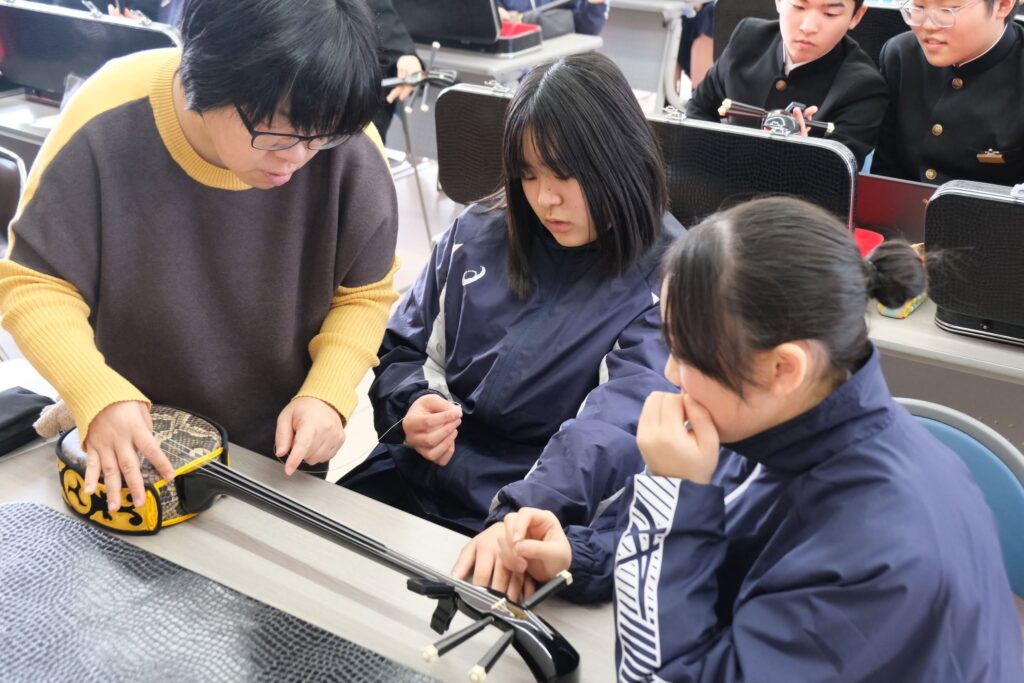
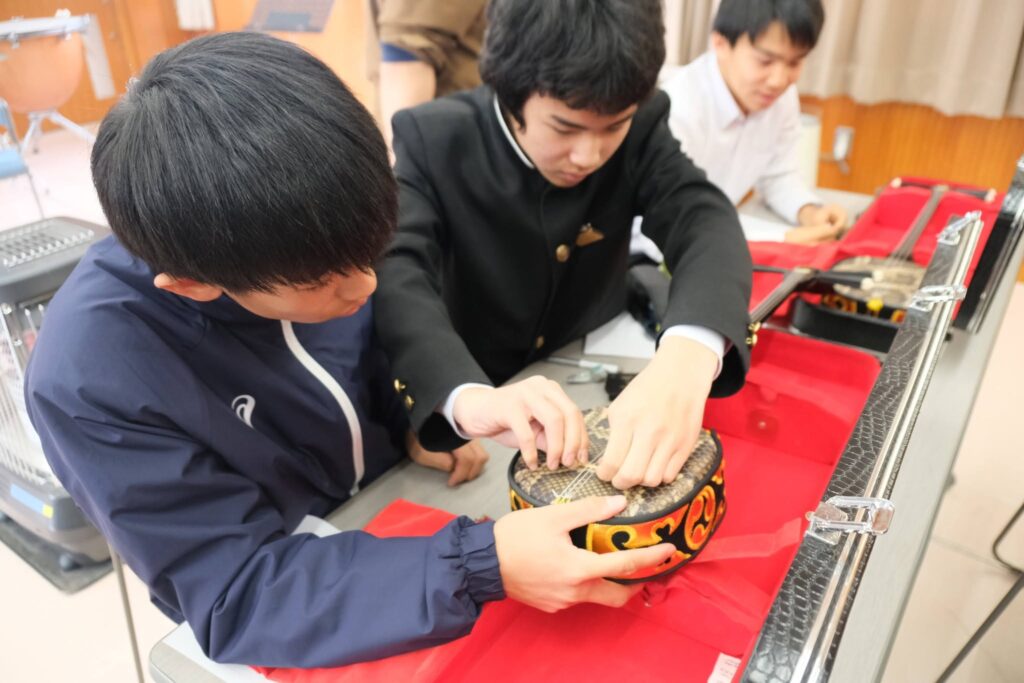
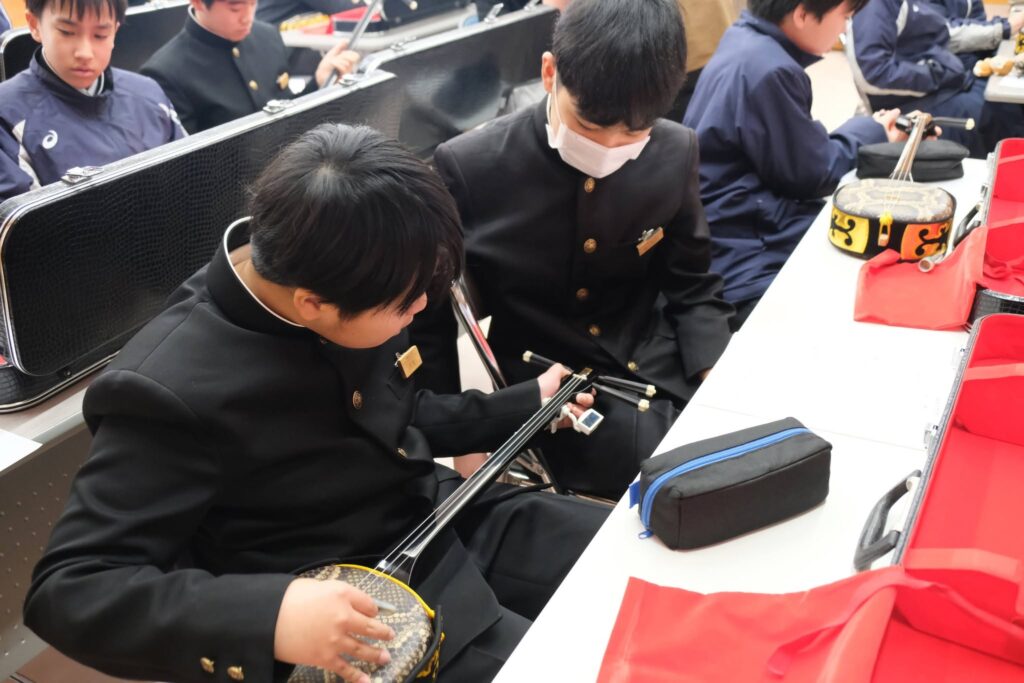
いざ実践の時間。まずは楽器の準備としてチューニングに挑戦しましたが、これがなかなか一筋縄ではいきません。三線特有の弦の張り具合や音の高さに、「あれ、合わない!」「難しい……」と苦戦する声も。使われなくなって久しい弦は切れてしまうことも。それでも、福岡や先生方からアドバイスを受け、一つずつ音を整え、楽器と向き合う真剣な表情が見られました。
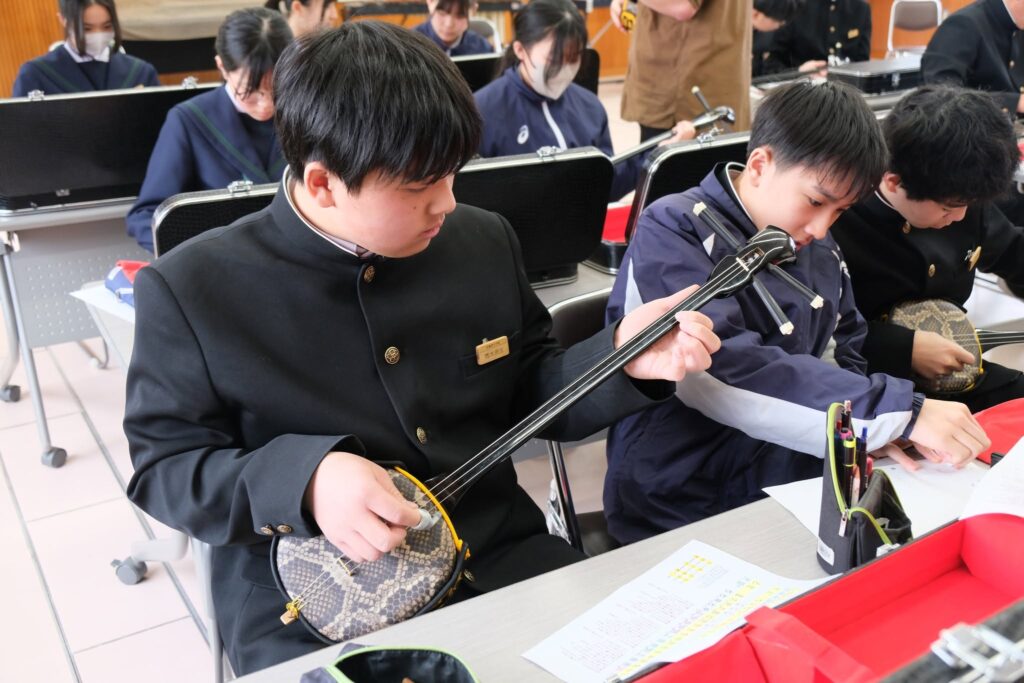
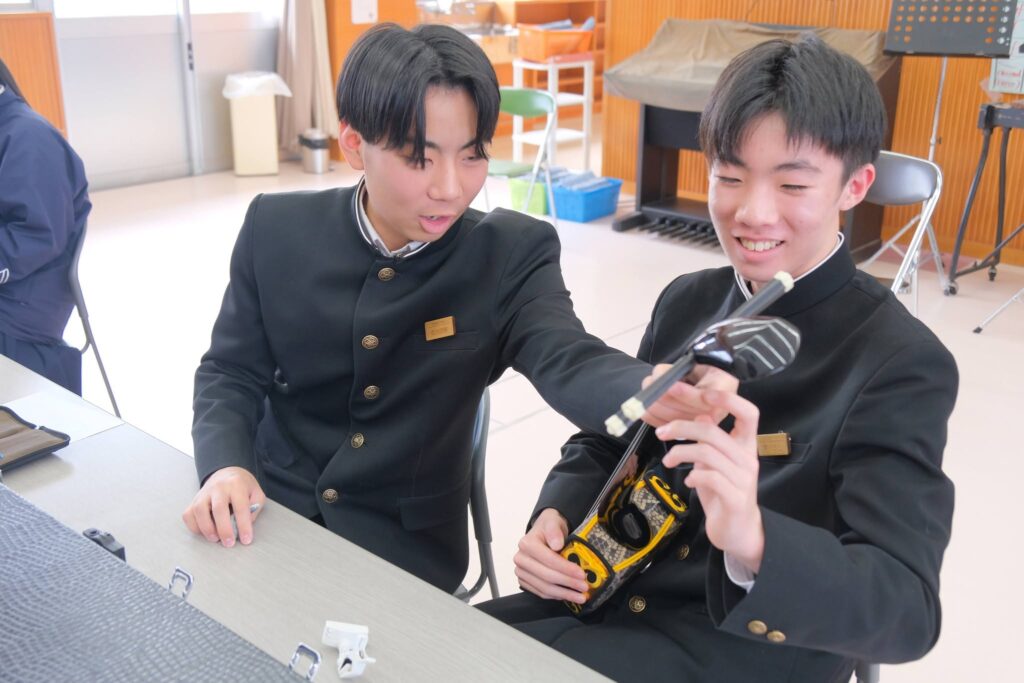
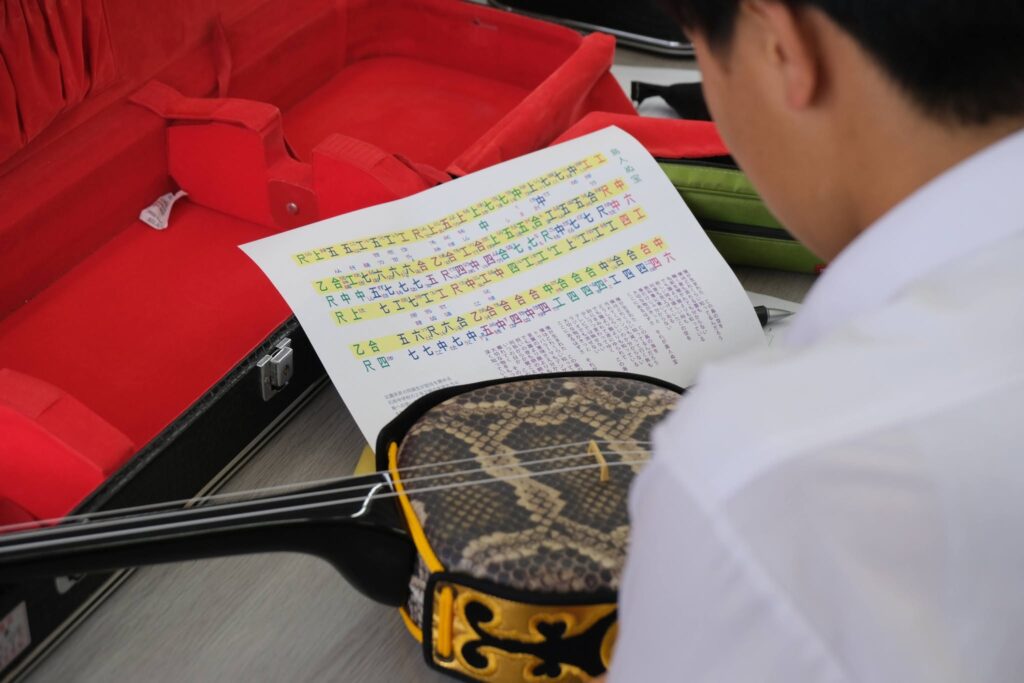
基本を学んだあとは、練習曲として「かえるのうた」と「島人ぬ宝」に挑戦。独特の音階で奏でると、お馴染みのメロディも一気に沖縄らしい情緒を帯びていきます。特に、普段からギターを趣味にしている生徒は、弦楽器の扱いに慣れているせいか驚くほどの早さで上達し、周囲を驚かせる場面もありました。
振り返りでは、「どことなくギターに似ていたけど、少し違ったから新鮮で楽しかった」「弾いていると、沖縄を感じた」「三線の弾き方だけではなく、沖縄の文化も知れた」といった感想が寄せられました。
ただ楽器を演奏する技術を学ぶだけでなく、その音色が生まれた土地の背景や、そこに暮らす人々の熱量に触れる。生徒たちの「やってみたい」から始まったこの授業は、音楽を通じて遠く離れた沖縄と西粟倉を繋ぐ、豊かな学びの時間となりました。
【7th & 8th Grade Music: The Sound of Okinawa Echoes through Nishiawakura!】
The sanshin, a traditional Okinawan stringed instrument, was once used by students here to practice for their school trips a few years ago. Upon discovering that a large number of these instruments were stored away in the music room’s closet, students eagerly expressed their desire to try them, saying, “We want to play them!” In response to their curiosity, a special class was launched, led by Fukuoka from Nest, who spent three years living on Kume Island in Okinawa.
The first half of the class went beyond just teaching musical techniques, diving into the history and culture behind the sanshin. Fukuoka shared stories of how local middle schoolers in Okinawa naturally pick up the instrument to preserve their heritage. The students listened intently to the fact that just as they dance the Soran Bushi, their peers in Okinawa take center stage as the main performers of the traditional Eisa dance during school and community festivals.
Then came the hands-on practice. The students began by trying to tune the instruments, which proved to be quite a challenge. The unique tension of the strings and the pitch left many struggling, with some calling out, “Wait, it’s not matching!” or “This is hard…” Some strings, which had gone unused for a long time, even snapped during the process. Despite these hurdles, the students showed serious dedication as they carefully adjusted each note with guidance from Fukuoka and their teachers.
After mastering the basics, they tackled two practice songs: “The Frog Song” (Kaeru no Uta) and “Shimanchu nu Takara” (Treasure of the Islanders). Played with the sanshin’s distinct scale, even the familiar melody of the children’s song instantly took on a traditional Okinawan flair. Notably, a student who regularly plays the guitar as a hobby picked it up with astonishing speed due to their familiarity with stringed instruments, surprising everyone around.
In their reflections, students shared comments such as, “It felt a bit like a guitar, but it was slightly different, which made it fresh and fun,” “Playing it really made me feel the spirit of Okinawa,” and “I learned not just how to play the sanshin, but also about Okinawan culture itself.”
This class was more than just an opportunity to learn how to play an instrument; it allowed the students to connect with the background of the land where those melodies were born and the passion of the people who live there. Sparked by the students’ own desire to “give it a try,” this project became a rich learning experience that bridged the distance between Okinawa and Nishiawakura through the power of music.