


【西粟倉小学校】全校 自然の不思議や歴史に触れる ふるさと元気ウォーク〈実施報告〉
2026.06.20
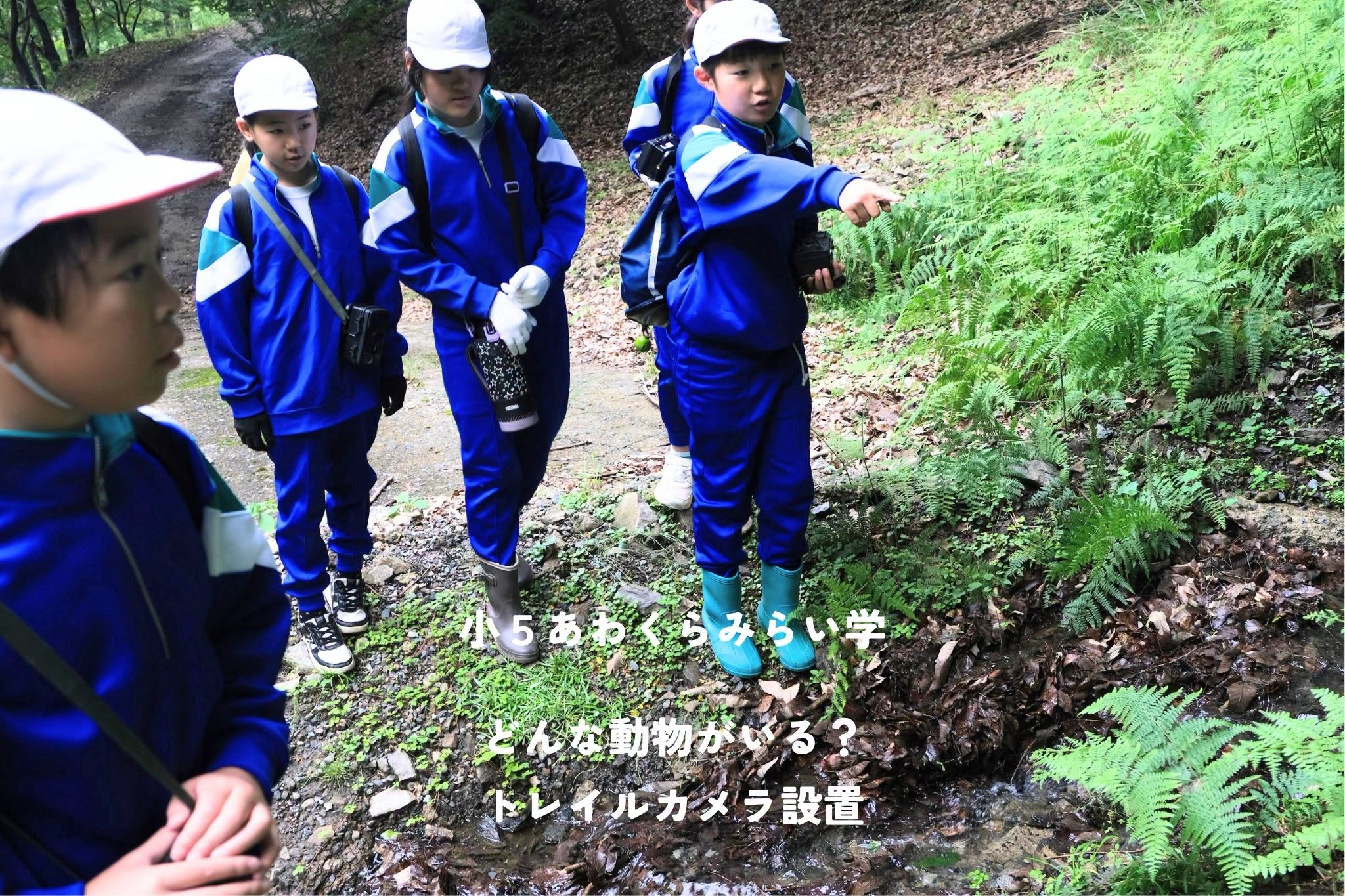
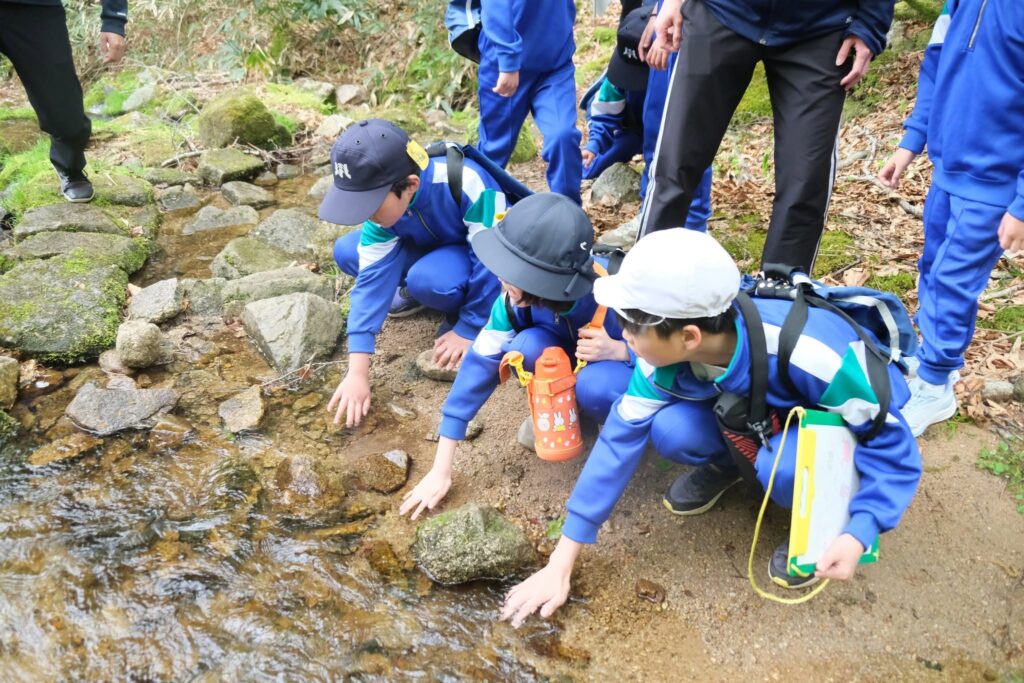
西粟倉小学校では、毎年原生林から旧大茅スキー場まで歩く「ふるさと元気ウォーク」を行っています。 まずは、6年生が考えたビンゴで原生林内をめぐります。「川に手を10秒つける」「○○な葉っぱを見つける」など自然にちなんだビンゴのお題を探しながら森林の中へ。
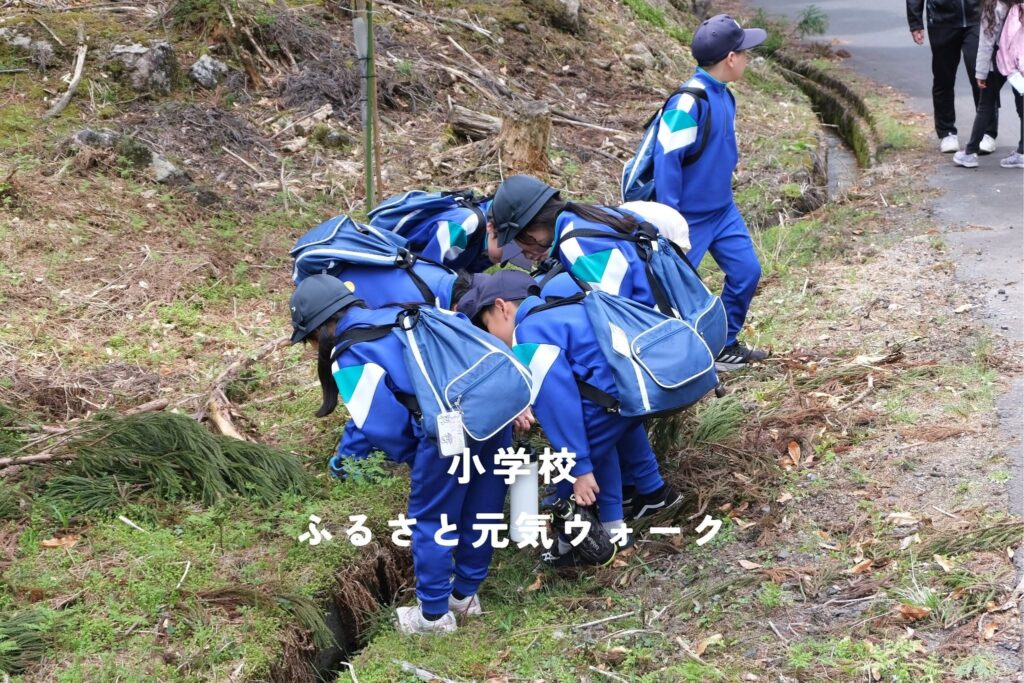
「川の水って冷たーい」と山の水の温度を感じたり、「杖になりそうな枝見つけた!」とお気に入りの枝を見つけたりしながら自然の中を進んでいきました。 高学年の子が低学年の子に向けて「ここ落ち葉で滑りやすいから気を付けて!」と声をかけてくれる場面も。 グループで森林の中を進みながら様々な自然と触れたり、高学年の頼もしさを感じたりすることができました。
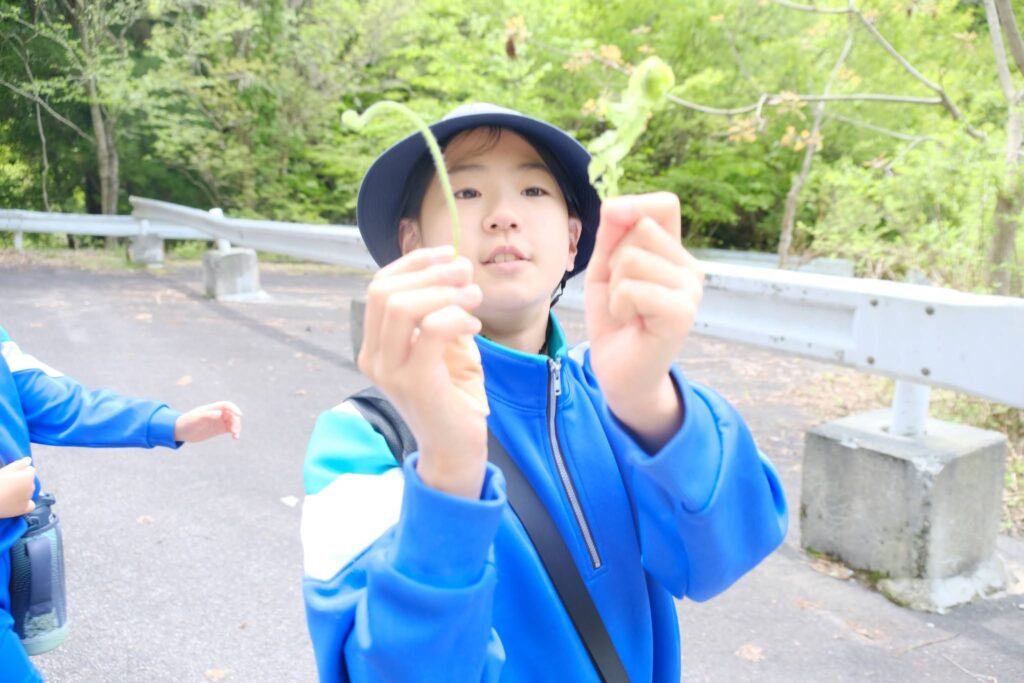
ビンゴが終わった後は、4年生~6年生は原生林からスキー場に向かって歩きます。その距離約3キロ。春の暖かい日差しに包まれながらウォーキングスタート。ウォーキング中には西粟倉の歴史や、自然にまつわる2択クイズを西粟倉村産業観光課の白籏佳三さん・Nestのスタッフから出題しました。
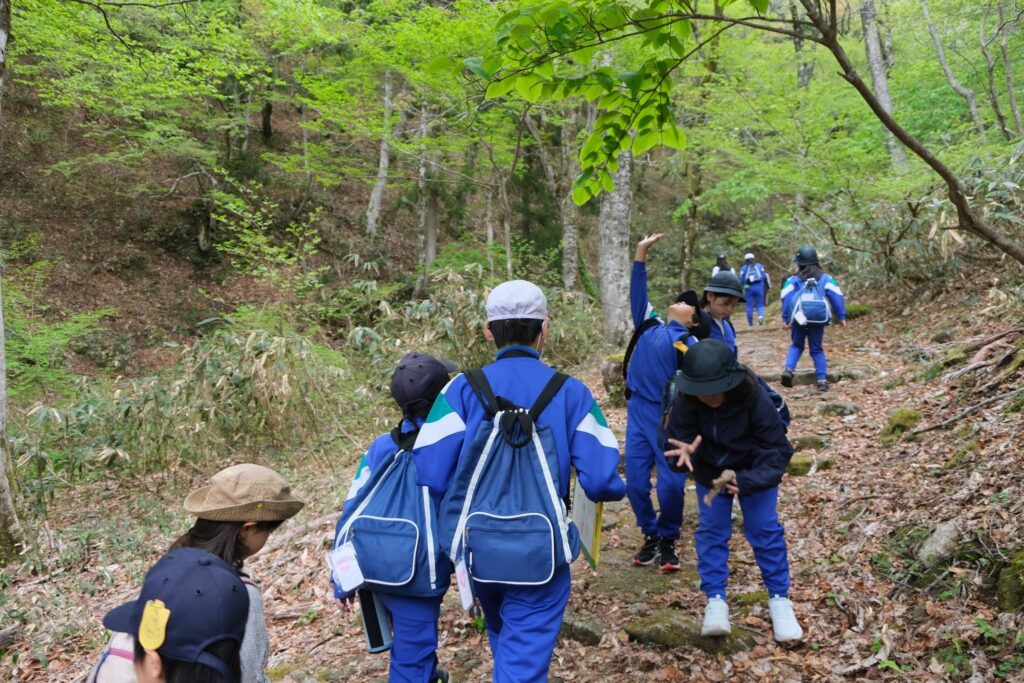
まずは「なぜ原生林には広葉樹が残っているのでしょう?」という問題。西粟倉の約9割の森林は人工林ですが、原生林には広葉樹がたくさん残っています。原生林は当たり前にあるものと思っていた子ども達からは「えぇ?なんで?」と疑問がわきます。
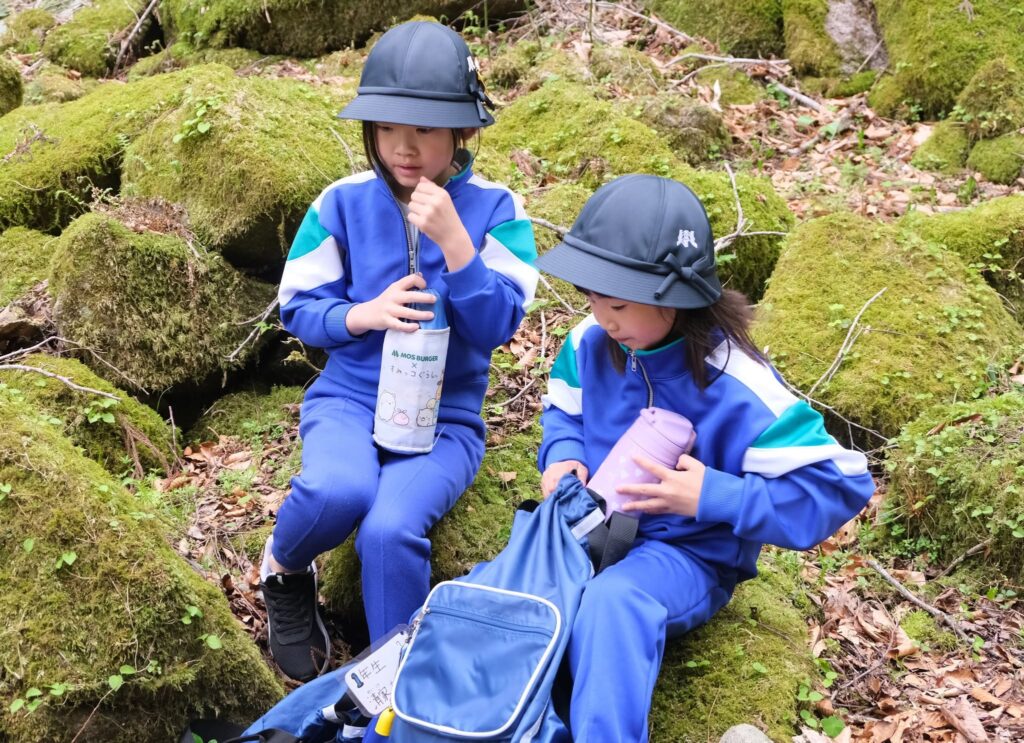
「昔江戸幕府の領地で針葉樹を植えなかったから」という答えに、「そんな昔のことだったの~」と驚きの声が。他にも、落差工やタタラ場にまつわるクイズなど全5問を出題。「どちらがスギの葉っぱでしょうか」というクイズでは、「こっちのとげとげの方!」と流石は西粟倉の子ども達。満場一致で正解していました。「それ知っとるよ!」と、クイズに関して自分の持っている知識を同級生に共有してくれる場面も見られました。
道中、前回行った「とことこ道草クッキング」に参加してくれた子どもたちは「この葉っぱ食べれる!」と他の子たちに教えてくれていた場面も。社会教育と公教育を行ったり来たりしながら学びが深まっている様子も見られました。
今回の「ふるさと元気ウォーク」を経て自然や歴史にまつわる新たな発見や再認識ができた子ども達。今後の学習につながるきっかけになっていたらと思います。
クイズづくり・当日のアテンドにご協力いただきました西粟倉村産業観光課の白籏さん・水杉さんありがとうございました!
[Elementary School: Discovering the Wonders of Nature and History at the Furusato Genki Walk]
Every year, Nishiawakura Elementary School hosts the “Furusato Genki Walk” (Hometown Energetic Walk), where students hike from the primeval forest to the old Omayu Ski Resort. The journey began in the forest with a bingo game designed by the 6th graders. The students ventured into the woods looking for nature-themed bingo clues, such as “dip your hand in the river for 10 seconds” and “find a leaf that looks like…”
As they moved through the natural surroundings, their voices echoed through the trees: “Wow, the river water is freezing!” as they felt the mountain water’s temperature, or “I found the perfect branch to use as a walking stick!” as they discovered their favorite sticks. Along the trail, older students were seen thoughtfully looking out for the younger ones, calling out, “Watch your step here, the fallen leaves make it slippery!” Hiking together as a group allowed the children to truly connect with nature while highlighting the dependable leadership of the upperclassmen.
Once the bingo game wrapped up, students in grades 4 through 6 began the main walk from the primeval forest toward the ski resort—a distance of about 3 kilometers. Wrapped in the warm spring sunshine, the walk officially got underway. Along the route, two-choice quizzes about Nishiawakura’s history and environment were presented by Keizo Shirahata from the Nishiawakura Village Industrial Tourism Division and the Nest staff.
The first question was: “Why do so many broadleaf trees still remain in this primeval forest?” While about 90% of Nishiawakura’s forests are planted timberlands, this specific area is still filled with broadleaf trees. Having always taken the primeval forest for granted, the children immediately questioned, “Wait, why?”
When they learned the answer—”Because it was once land under the direct control of the Tokugawa Shogunate, so conifers were not planted here”—they gasped in surprise, saying, “Wow, it goes back that far?!” They tackled a total of five quiz questions, including ones about dropshafts (erosion control structures) and historical tatara ironworks sites. When asked, “Which of these is a cedar leaf?” the children proudly showed their local knowledge, shouting, “The spiky one over here!” and answering correctly with a unanimous vote. Some students even chimed in with, “I already know about that!” eagerly sharing their own knowledge with their classmates.
Additionally, some children who had participated in the previously held “Tokotoko Michikusa Cooking” (Roadside Foraging and Cooking) event pointed out plants along the path, telling their friends, “Hey, this leaf is actually edible!” It was a wonderful moment showing how their learning is deepening as they naturally bridge their experiences between social education programs and school education.
Through this “Furusato Genki Walk,” the children made new discoveries and reconnected with the nature and history right in their backyard. We hope this experience serves as a great catalyst for their future learning.
A heartfelt thank you to Mr. Shirahata and Mr. Mizusugi from the Nishiawakura Village Industrial Tourism Division for your wonderful help with creating the quizzes and guiding us on the day of the event!