


【Nest/Pocket】あわくらみらいアカデミー/やってみんWonder カカオ豆からつくってみよう!オリジナルチョコレートづくり♯3〈実施報告〉
2026.06.14
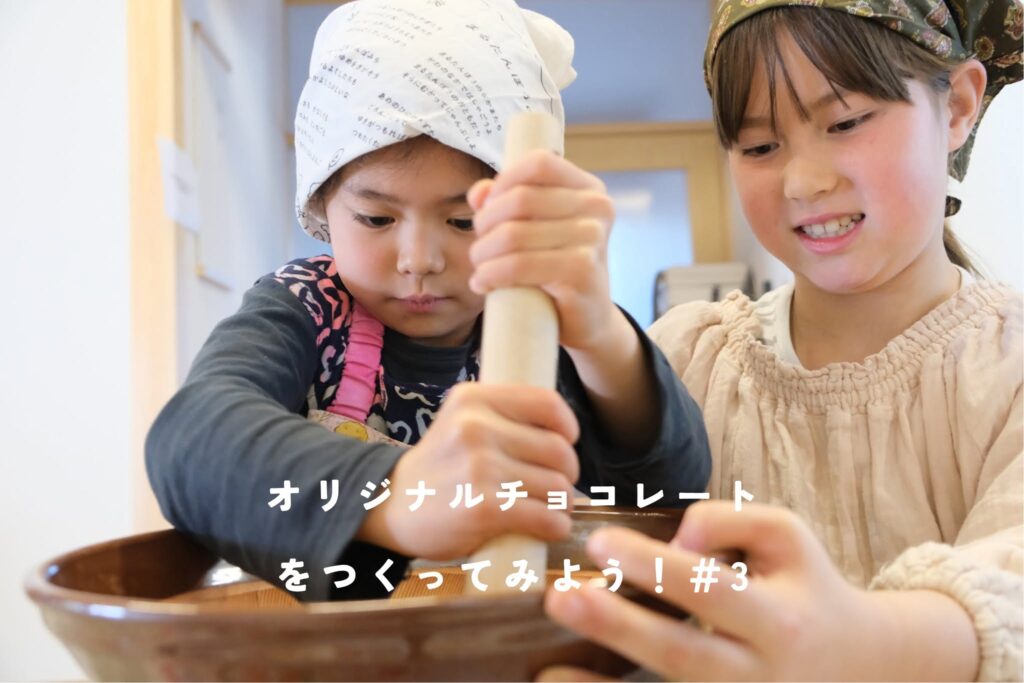
Pocketでは3回目の開催となったチョコレートづくり。 いつも食べているチョコレートを、カカオ豆から自分たちでつくっていきます。
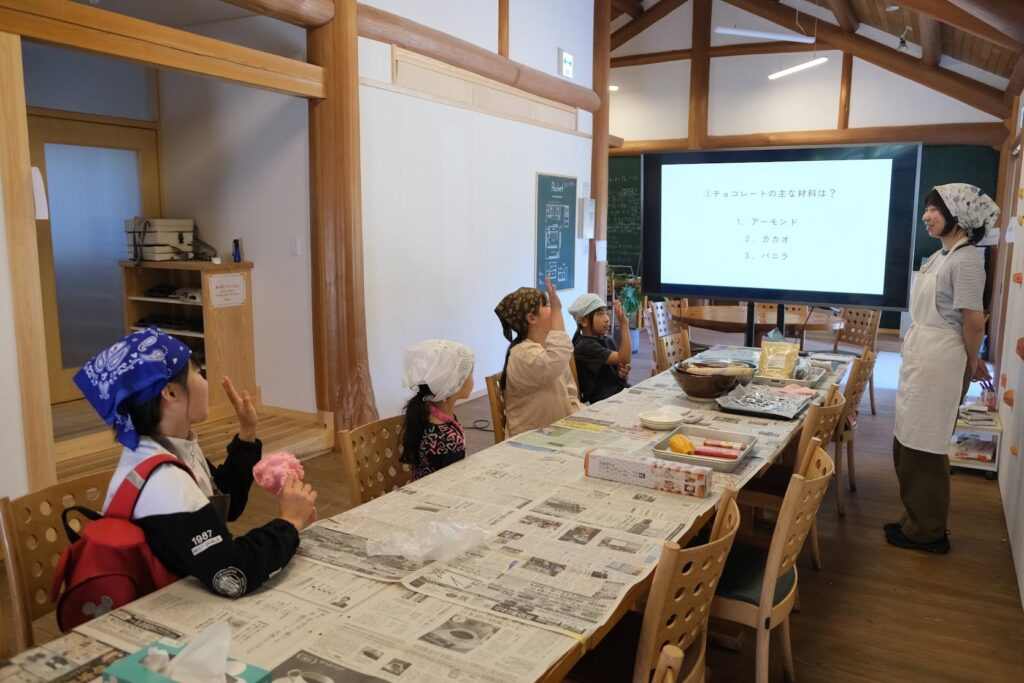
今回は、チョコレートづくりがはじめての小学生の女の子3名と、なんと全部の回に来てくれることになった中学生の女の子1名が参加してくれました。
まずはじめに、チョコレートの材料にまつわるクイズを行ないます。「チョコレートの原料になっているのは次のうちどれでしょう?」アーモンドの実、カカオの実、バニラの実のなかからみんなが選んだのは……「カカオの実」!大正解!
「じゃあ実際に、今日使うカカオ豆を食べてみよう!」ということで、チョコレートの材料である「カカオ豆」を砕いたもの(カカオマス)を食べてみます。「うわ!苦っ!」いつも食べているチョコレートの味と全然違って、顔が曇る参加者たち。
「ここからどうすれば、みんながいつも食べているチョコレートになるかな?」カカオマス以外にも、チョコレートには甘さの「砂糖」、とろける「カカオバター」、まろやかさの「粉乳(ミルク)」が必要であることをつきとめました。
チョコレートの材料がわかったところで、いざ、チョコレートづくりスタート!
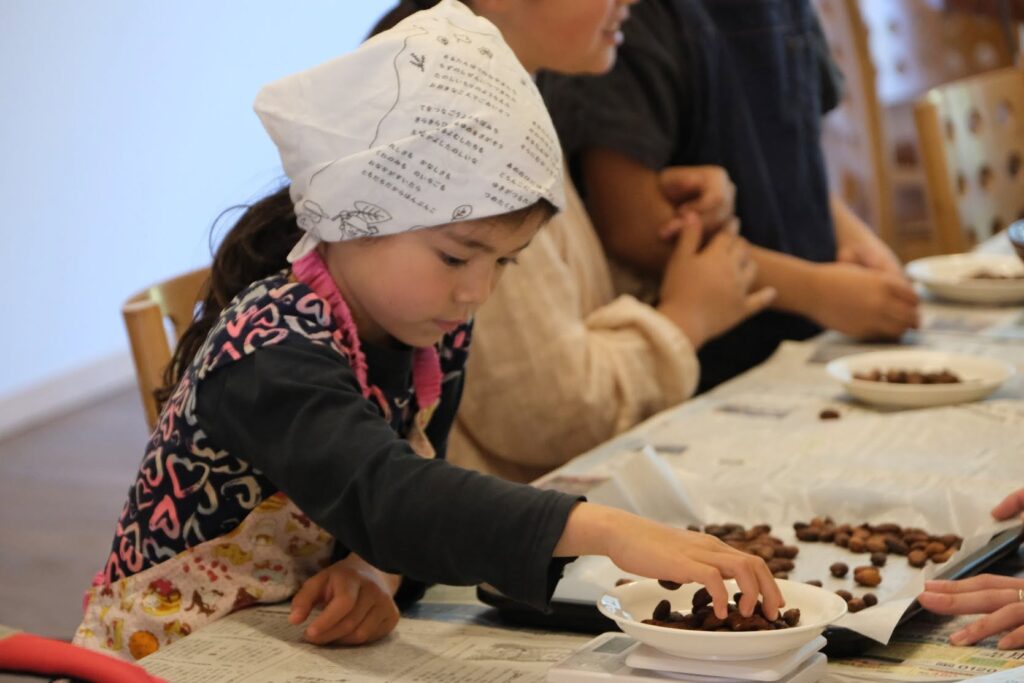
まずは、焙煎したカカオ豆の皮を剥いて、中からチョコレートの材料「カカオニブ」を取り出します。ひとつひとつ、なるべく粉々にしないように集中して、指の腹を使って剥いていきます。ボロボロになりやすいカカオ豆ですが、きれいにツルンと剥けたときは「見て!」と参加者同士で見せ合いっこをしていました。
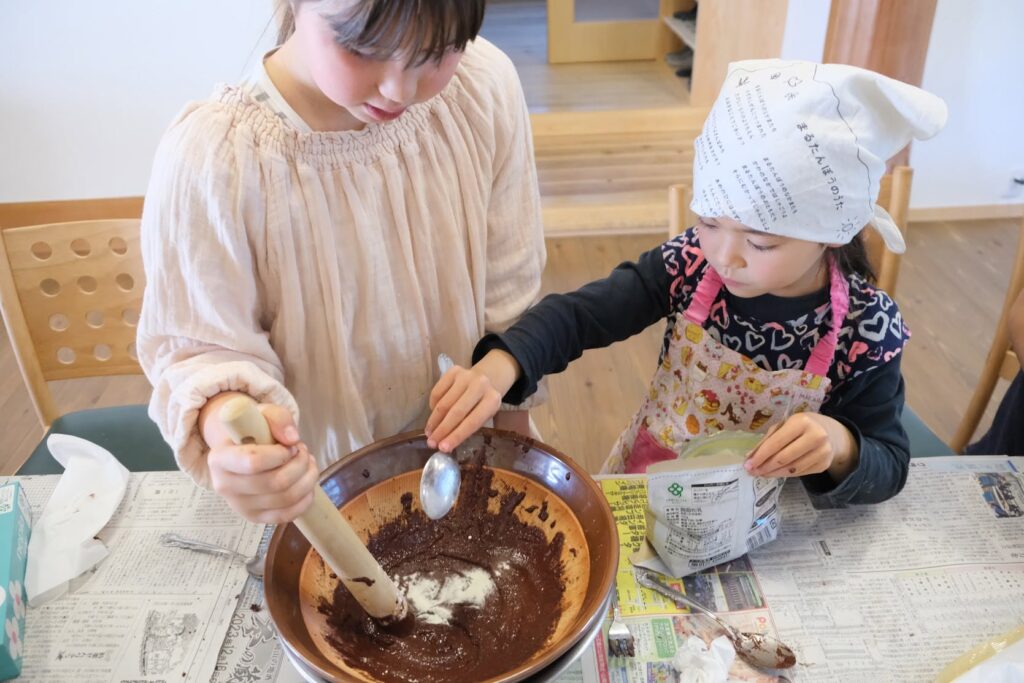
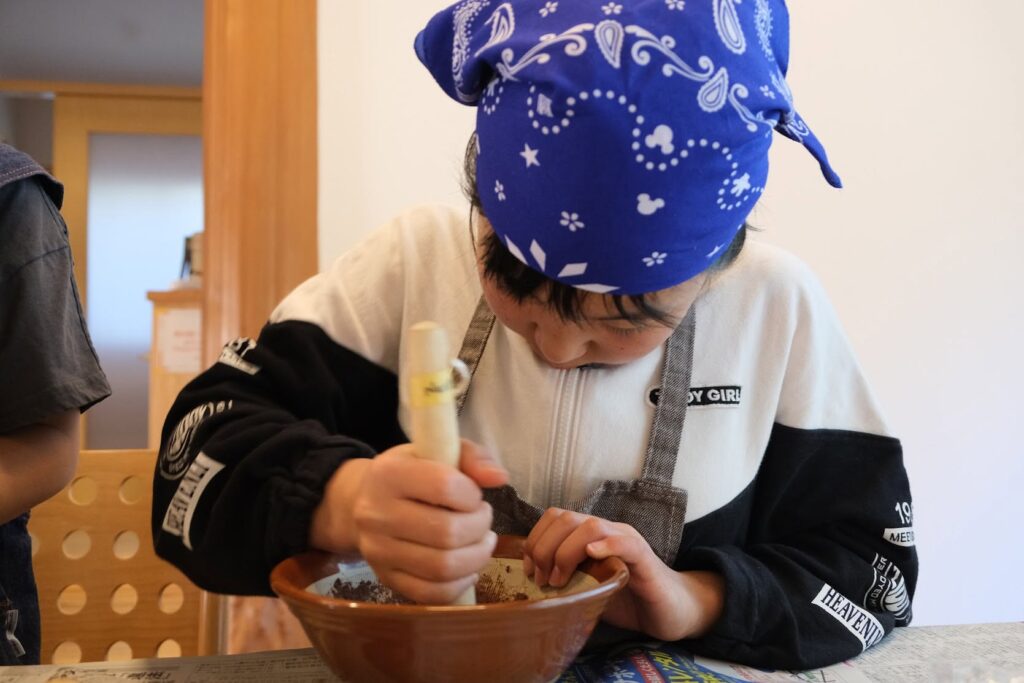
続いて、カカオニブをすり鉢でひたすらすり潰します。 ここではかなり根気強く力を込めてすり潰す必要があるのですが、二人で順番に協力したり、一人で黙々と手を動かしたり……大人の力を借りられる「大人チケット」も用意していましたが、参加者はほとんど大人の力を借りることなく、すり潰し作業に取り組んでいました。
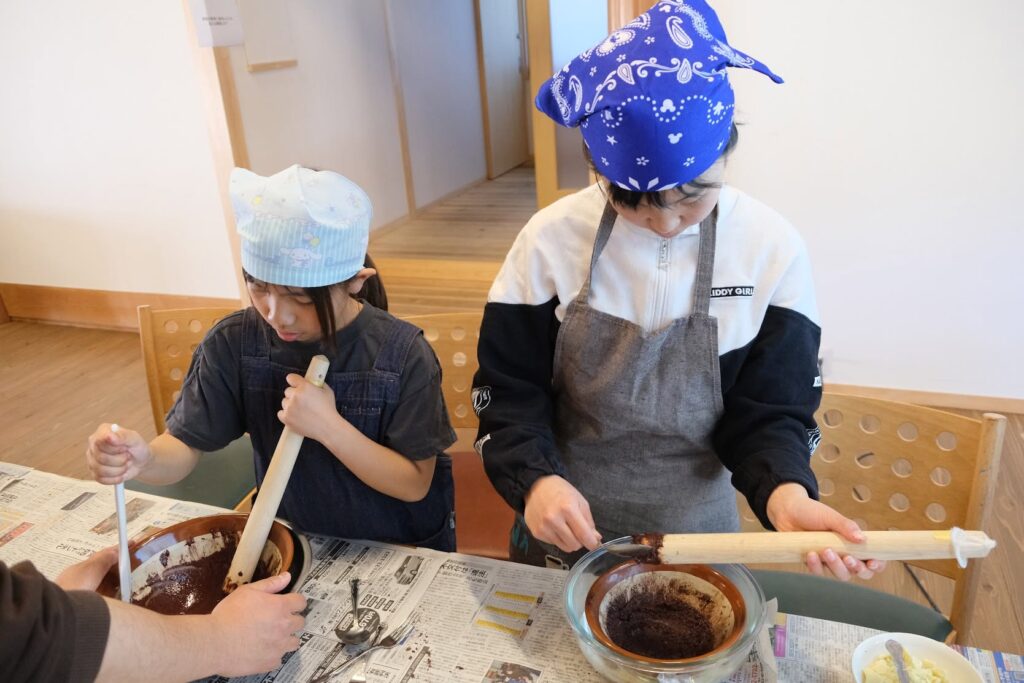
粉々になったところで、次に湯せんをしながらカカオバターを加え、チョコレートのあのとろみを出していきます。湯せんをすると色が少しずつ変わっていき、とろみが目に見えてくると、「すごい!色変わった!」「なんか溶け出してきたよ!」と思わず声が漏れます。
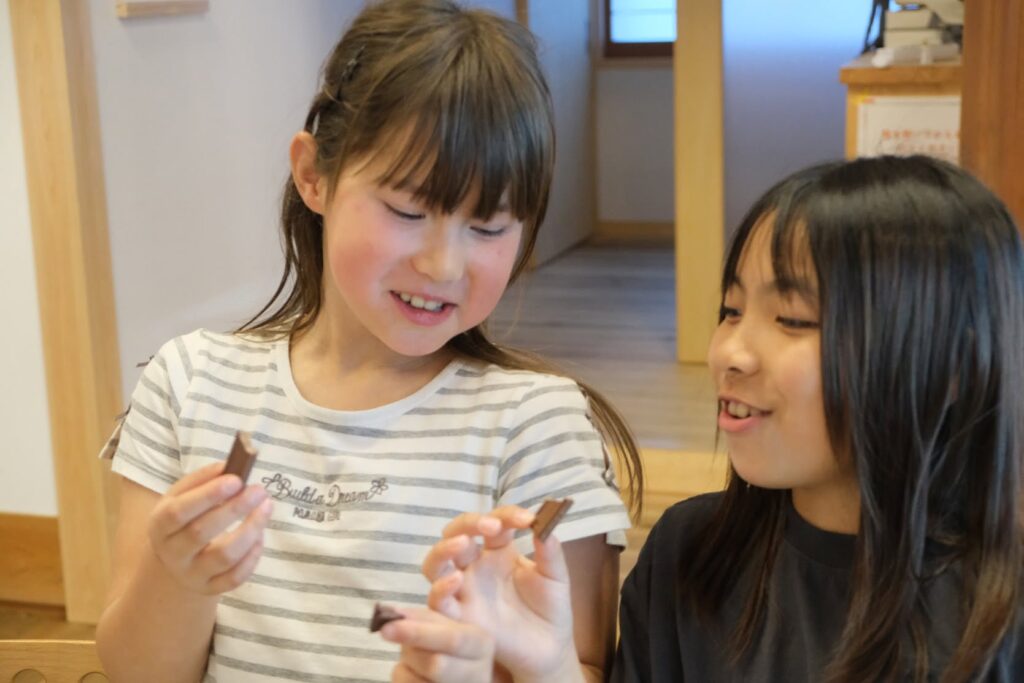
見た目もチョコレートに近づいてきたので「ちょっと味見してみる?」と、スプーンですくってペロリ。「うわ、まだ苦いし、豆の時よりも苦いかも」甘くするには何をいれたらよさそう?「砂糖!」最初の材料説明の時に知ったことを思い出して、次に味の調節に入っていきます。
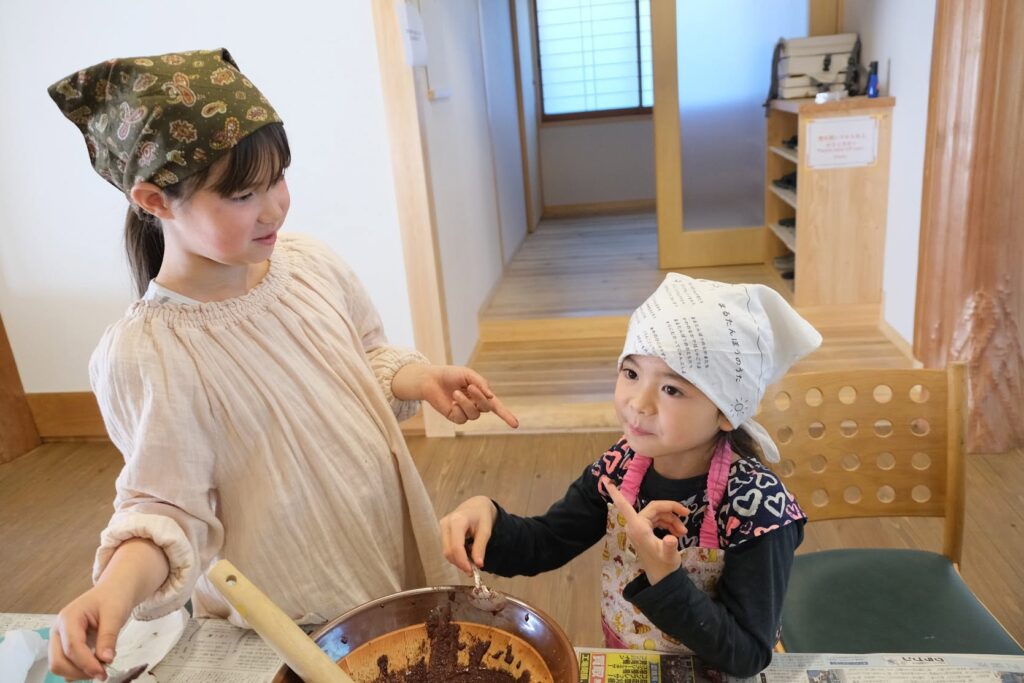
甘くするための砂糖(粉糖)と、まろやかさを出すための粉乳(スキムミルク)を投入します。最初は味見して眉をひそめていた参加者の顔も、チョコレートの味になってきたのか「うんうん」と満足そうな表情に変わっていきました。
また、参加3回目の子は、前回「早く混ぜたらとろとろにならなくなった」という経験も思い出しながらスタッフからの注意事項「なるべく速くすり潰さない」を実践していました。
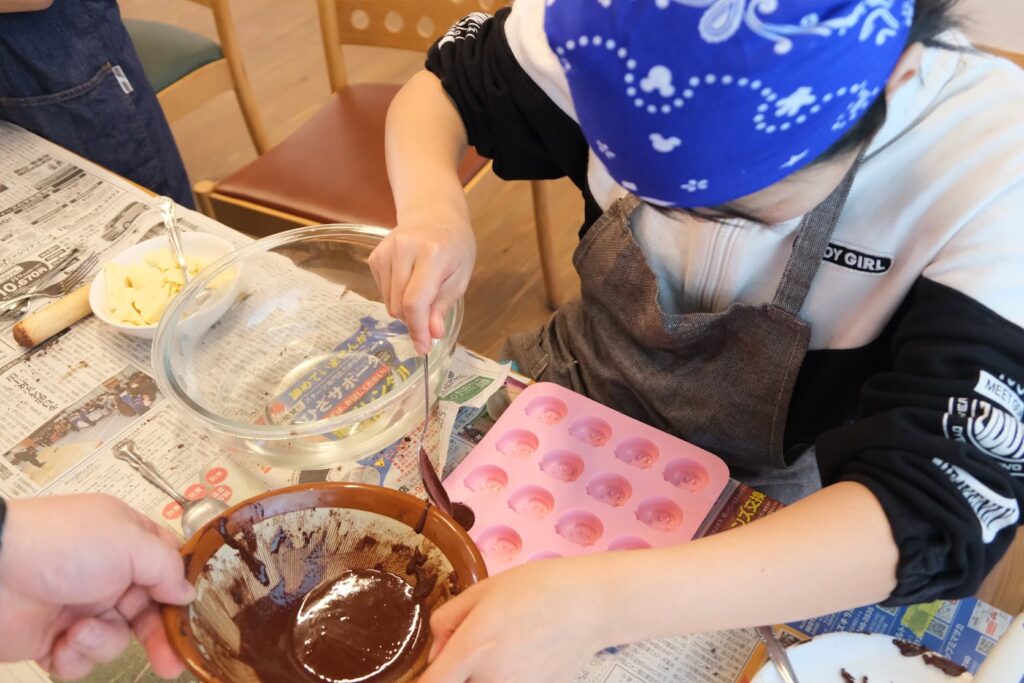
味を整えたら、最後にチョコレートを固める作業。自分の持ってきた型に流し込んだり、クッキングシートの上でスプーンを上手に使ってハート型やうさぎ型を作ったり、思い思いのチョコレートを作りました。
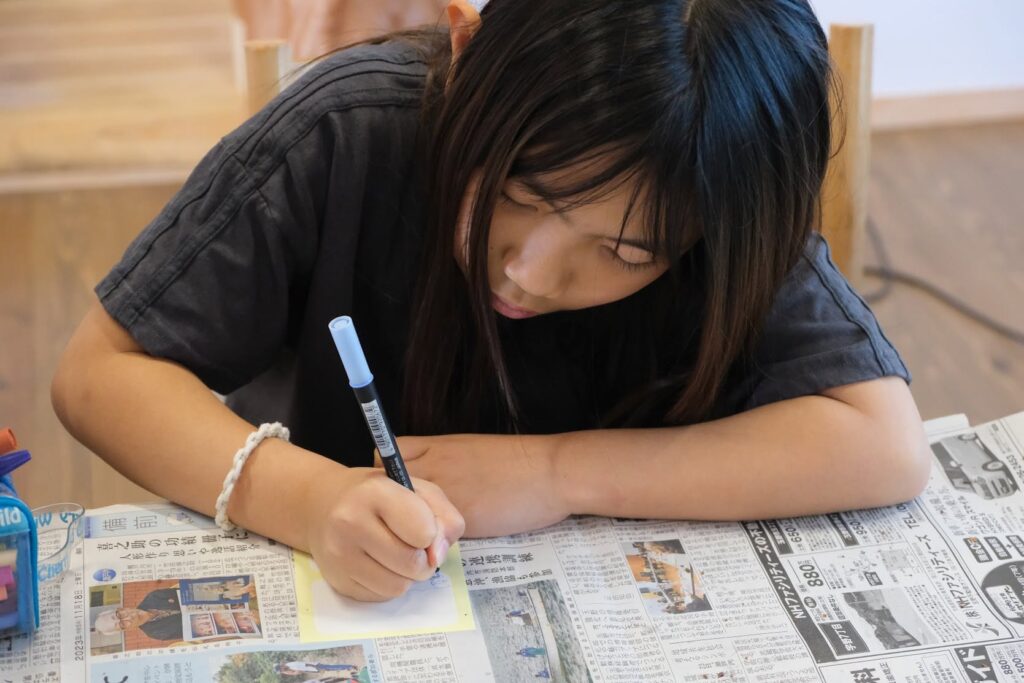
冷蔵庫で冷やし固めている間、お家に持って帰る用のパッケージも作ってみよう!ということで、市販のチョコレートのパッケージを参考にしながら、産地や原料、メッセージ、イラストなどが書かれたパッケージを考えていきます。
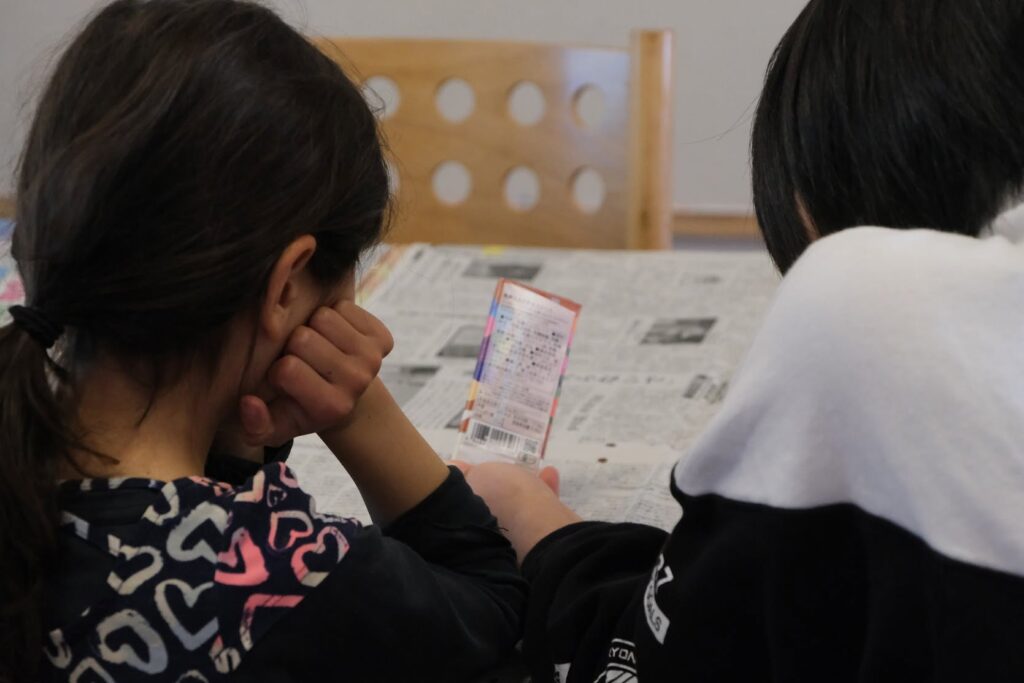
そのなかで「じゃあ今日作ったチョコレートの値段はどうしようか?」という問いから、大学時代にフェアトレードの推進活動を行っていたNestスタッフが「フェアトレードチョコレート」についてお話ししました。
「安くチョコを買いたい!と思う先進国の人が多くなればなるほど、途上国のカカオ農家の人たちが得られるお金が減ってしまう。大人だけじゃなくて、みんなみたいな子どもたちも、学校に行けずに働かないといけないこともあるんです」実際に自分たちの年齢の子どもたちの話が出てくると、参加者たちは静かに耳を傾けていました。
パッケージづくりでは、好きな色のペンを使いながら今日使った材料を記したり、「おいしいよ」とメッセージを書いたり。フェアトレードの話を聞いて、いつも買っているチョコレートよりも高い値段を設定した参加者は、「本当は安く売ろうと思ったけど、カカオ豆を作る人にもお金をあげられるようにしないと」と口にして、心を込めてパッケージを仕上げていました。
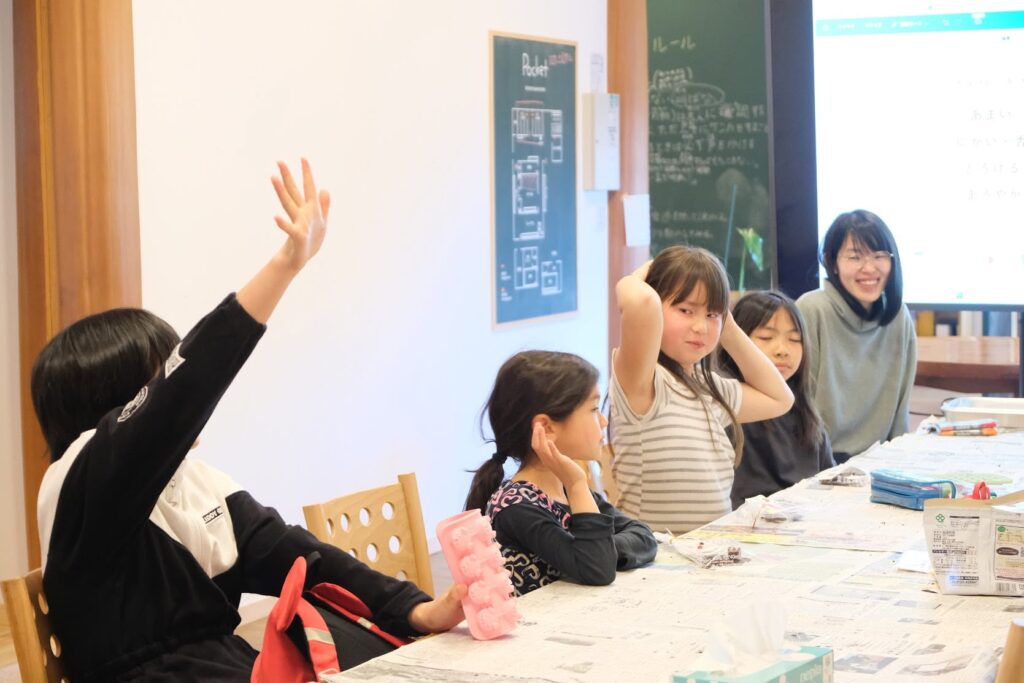
振り返りの時間では、参加者全員から「楽しかった!」「またやりたい!」という声が。 3回継続して参加してくれた中学生の女の子からは「3回やって、今日がいちばんよくできた!」「ゴリゴリすり潰すのが大変だったけど、楽しかったからまたやりたい!」と、長時間の作業だったにもかかわらず、見事に完成までやりきった参加者たち。チョコレートづくりを通して、いつも食べているチョコレートがどんなものからできているのか、どうやってあの姿に変わったのか。手作りだからこそわかる発見があったのではないでしょうか。
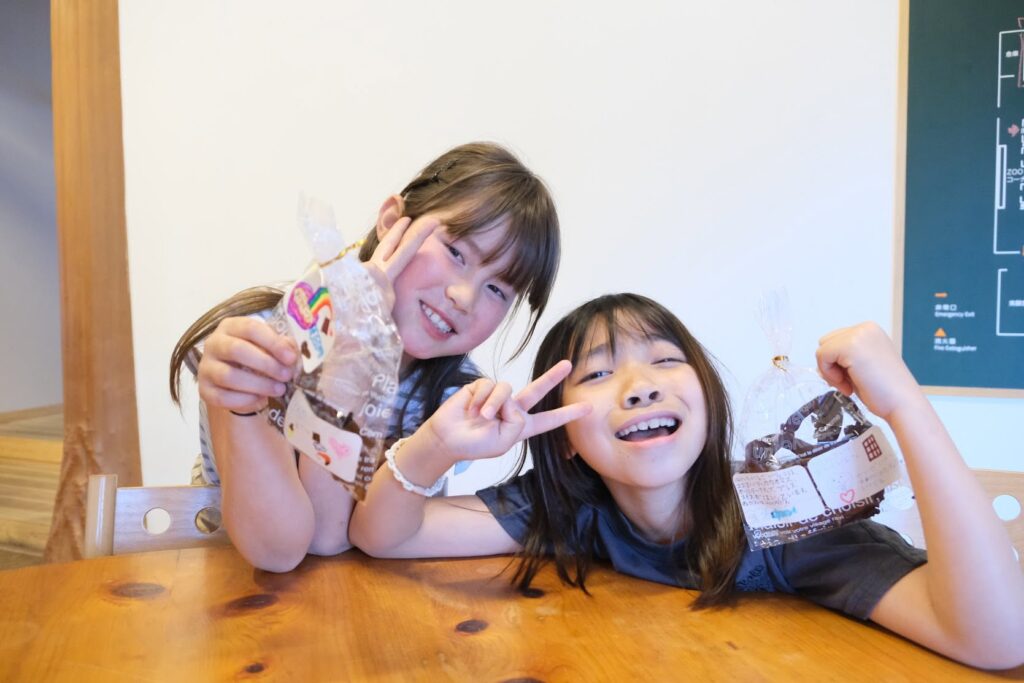
また来年のバレンタイン時期にも、第4回目のチョコレートづくりを計画中です! ぜひご参加ください!
[Make It from Cacao Beans! Original Chocolate Making #3]
This marks the third time Pocket has hosted the chocolate-making workshop! In this event, participants make the chocolate they usually eat, starting all the way from the raw cacao beans.
This time, the workshop welcomed three elementary school girls trying chocolate-making for the first time, along with one junior high school girl who has incredibly attended every single session so far.
The workshop kicked off with a quiz about chocolate ingredients. When asked, “Which of the following is the raw ingredient for chocolate: almond, cacao fruit, or vanilla bean?” everyone confidently chose the cacao fruit—and they were absolutely correct!
“Now, let’s actually taste the cacao beans we’re using today!” The participants tried crushed cacao beans (cacao mass), the core ingredient of chocolate. “Whoa! It’s so bitter!” Their faces clouded over as they realized the taste was entirely different from the chocolate they were used to.
“So, what do we need to add to make it taste like the chocolate you always eat?” Through this inquiry, the girls discovered that in addition to cacao mass, chocolate requires sweetness from “sugar,” a melting texture from “cacao butter,” and smoothness from “powdered milk.”
With the ingredients figured out, the chocolate-making officially began!
First, they peeled the roasted cacao beans to extract the “cacao nibs.” Working with their fingertips, they focused intensely on peeling each bean without crushing it into powder. Although cacao beans can easily crumble, when a bean peeled perfectly smooth, the participants proudly showed it to each other, saying, “Look at this!”
Next came the task of grinding the cacao nibs into a smooth paste using a mortar and pestle. This step requires a lot of patience and physical effort. The girls took turns collaborating in pairs or quietly worked away on their own. Although they were given “Adult Tickets” to call on staff for help, the participants barely used them, pushing through the grinding process almost entirely by themselves.
Once the nibs were finely ground, they placed the mixture over a hot water bath and added cacao butter to create that classic glossy melt. As the heat gradually shifted the color and the chocolate visibly softened, the girls couldn’t help but gasp, “Wow! Look at the color changing!” and “It’s starting to melt!”
As the mixture began to look like real chocolate, the staff asked, “Want to try a little taste?” The girls scooped up a tiny bit with a spoon. “Ugh, it’s still bitter. It might even be bitterer than the bean itself!” What should we add to make it sweet? “Sugar!” Remembering what they learned at the beginning, they moved on to adjusting the flavor.
They added powdered sugar for sweetness and skim milk powder for smoothness. The faces that had frowned during the first taste test gradually relaxed into satisfied smiles as the mixture transformed into true chocolate.
The junior high student, attending for her third time, kept the staff’s warning in mind: “Don’t grind too fast.” Remembering her past experience where grinding too quickly prevented the chocolate from becoming smooth, she carefully paced herself this time.
Once the flavor was perfected, it was time to let the chocolate set. The participants poured the liquid into molds they brought from home, or used spoons skillfully on parchment paper to shape their own creations, like hearts and rabbits.
While the chocolate was cooling in the refrigerator, the girls designed custom packaging for taking their treats home. Looking at commercial chocolate wrappers for reference, they came up with designs featuring the chocolate’s origin, ingredients, messages, and illustrations.
During this process, the staff raised a question: “So, how much should we charge for the chocolate you made today?” This opened the door for a Nest staff member, who had promoted fair trade during their university days, to share a story about “Fair Trade Chocolate.”
“The more people in developed countries want to buy chocolate cheaply, the less money cacao farmers in developing countries receive. Sometimes, children just like you have to work instead of going to school,” the staff explained. Hearing about children their own age, the participants listened intently in silence.
When wrapping up their packaging, the girls used colorful markers to list the ingredients they used and write sweet notes like, “It’s delicious!” After hearing the fair trade story, one participant who set a higher price than usual noted, “I originally thought about selling it cheap, but we need to make sure the people who grow the cacao beans get their fair share of money.” She then put her whole heart into finishing her package.
During the reflection time, every participant shared how much fun they had, saying, “I want to do this again!” The junior high student who completed all three sessions proudly reflected, “Out of all three times, today was my best work! Grinding was hard work, but it was so much fun that I want to try it again!” Despite the long, labor-intensive process, the participants beautifully carried their projects through to completion. By making it from scratch, they walked away with discoveries that can only be found by working with your hands—learning what chocolate is made of and how it transforms into the treat they love.
Another round of chocolate-making is already being planned for next year’s Valentine’s season! We look forward to seeing you there!